Showing posts with label Nature. Show all posts

Friday, May 10, 2024

Four tips from my visit to Tadoba

Four tips from my visit to Tadoba-Andhari Tiger Reserve:

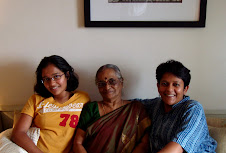
1) Adopt the Coconut-Seller Look early in the game. After repeatedly shampooing red dust from hair, I realised that a turban is the only real solution. Now I am offering this free tip to anyone who is mad enough to do summer safaris in the Deccan Plateau heat: Take a stole, people. And become a coconut seller. The beautiful complexion you are seeing in the photo is actually laal-laal Dakkhani mitti with an under-layer of sunscreen (the bonus is that it hides all skin defects).

2) Oh by the way, take a second stole also, if you value your skin and lungs. Naak-mooh dhak-kar saans lete rahiye, as the famous airline announcements say. It's perfect advice for safaris also.

3) There is a strange phenomenon in Tadoba. Vodafone works there. This has never happened in recorded history. That Vi works where other networks fail 🙂 Now you must be wondering if Jio works. Yes, it does. We expect nothing less from the country's juggernaut. But all networks are spotty, so go to Tadoba safaris only if you enjoy being connectivity-free.

4) They don't allow you to click photos on mobile phones while in the forest. So your fancy i-phones are only ornamental. Big-ass cameras are OK, provided you cough up a 250 rupee fee. So my last tip is to go with a photographer friend, preferably one who enjoys carrying around big lenses. Tiger ko door se dekhna hi sehat ke liye accha hai.

#deepasvoice

#freeadvice

#tadobaandharitigerreserve

Thursday, October 24, 2019

Coral Jasmine - a carpet of flowers

If you visit a flower market in Mumbai, you will usually not see the coral jasmine. It flowers at night, and when day breaks, all the flowers fall, leaving a beautiful carpet of flowers on the ground. It is a fragile flower, that fades quickly, and doesn't do well when transported to markets.

In my mother's apartment there is a coral jasmine plant; and every morning, the night watchman gathers up the flowers and gives them to my mother. Some of them go into the kitchen temple, but the others are used like this, as a beautiful carpet for her plants.
Coral jasmine, offered to the Tulsi, and to other plants 
This jasmine is offered to gods, even after it has fallen to the ground. In Tamil, it is called kanaka malli, where kanaka means coral, and malli is jasmine. In Hindi, the coral jasmine is called harsingar, or the adornment of God. It is the state flower of West Bengal. In Bengali it is called sheuli.

This flower is also identified as parijat, a legendary flowering tree that is mentioned in the Puranas. As is common in Indian legends, there are multiple candidates claiming to be parijat :) In Tamilnadu, the parijat of legend is a much larger, all-white flower, with a very intense fragrance.

Krishna Uprooting the Parijata Tree, folio from a Bhagavata Purana manuscript (text in Sanskrit), Delhi region or Rajasthan, India, artist unknown,1525–50; opaque watercolor and ink on paper. Los Angeles County Museum of Art. 

Sunday, June 07, 2015

Nachni and Food Security - a village meal in the Palghar district

- by Deepa Krishnan

A few days ago, I had lunch in a small village home in the Palghar district of Maharashtra. The people who live in this village are tribal agriculturalists, practising subsistence farming.
One of the families cooked lunch for us. We ate sitting on mats on the floor. I was super-hungry and wolfed down my meal in minutes. Our hostess brought endless servings of everything, until I was fit to burst. Here's a photo of what I ate:
Everything on my plate was grown locally. There was rice, which is grown during the monsoon season on the nearby hill slopes in small terraces. There was bhendi (okra / ladies finger), chowli (black-eyed beans), tuar (pigeon-pea) dal, two types of home-made papad and a home-made mango pickle. All of it came from nearby farms and fields. 

But the thing that delighted me most was the dark brown roti, called nachni bhakri.  

Nachni (finger millet) is one of the healthiest things you can eat. Loads of calcium and iron. Lots of fibre. Slow to release sugar into the system, great if you're fighting a battle against weight gain. It's gluten-free too. I ate it with the spicy black-eyed beans, and it was delicious.

Nachni is a critical nutritional element for this kind of village. That's because nachni is a tough and flexible plant. It can grow in diverse soils, with varying rainfall regimes, and in areas widely differing in heat and length of daylight availability. It is hugely pest resistant. It doesn't even need chemical pesticides. So while a rice crop may fail for many reasons, a nachni crop is far more dependable, and can literally ward off starvation. 

In addition, nachni is easy to store. Once harvested, it is seldom attacked by insects or moulds. The long storage capacity makes it an important crop in risk-avoidance strategies for poorer farming communities.

In fact, not just nachni, all traditional millets are important for rural India. In the nearby Vikramgad weekly rural market, I photographed one of the stalls selling different types of millets and pulses. The dark coloured one on the right is nachni.
This area of Maharashtra has lots of rain in the monsoons, but goes very dry later. There is no irrigation. Here is how the land looks in the monsoons.
And here is how the area looks in summer:
There is no cultivation in summer, probably because the existing water management systems don't husband groundwater resources adequately for irrigation. For drinking and bathing, the government provides well water. Since there is only one main monsoon crop (rice), the dependence on that crop is very high. If that crop fails, the entire economic backbone of area will collapse. It is therefore sensible to divert some land - even 'warkas' land (low productivity land) is ok - to grow nachni and other millets for food security.

When I was researching this article, I read this very interesting and informative article on why millets are so invaluable. I highly recommend you read it too. After I read it, I've decided to start eating more millets. I'm going to reduce my intake of rice and wheat, because really, from all points of view, it looks like the smart thing to do. 

Thursday, August 29, 2013

A beautiful trip to Bedse Caves

- By Deepa Krishnan

Ever since the monsoon season started, I have been wanting to see the Western Ghats in all their green glory. Finally we found the time, a perfect day, half sunny, half cloudy, and we set out for the Buddhist Caves at Bedse. 
The mountains ahead of us
Most people living in Bombay don't know that the spread of Buddhism on the West Coast of India began in the Mumbai Metropolitan Region; in what we today call Nallasopara (the next train station on the Western line immediately after Vasai). The Mauryan Emperor Ashoka (273 to 276 BC) sent an emissary called Dharmarakshita to Sopara (it was at that time major trading port). Ashoka's Edict at Sopara is now in the Prince of Wales Museum, but you can see a photo and translation of the edict here

The Buddhist monks found the perpendicular cliffs of the Sahyadris eminently suitable for their monsoon prayer retreats. What may have started as a small rock-excavation experiment of the monks turned into a very major architectural trend, with over 1200 cave temples excavated in India. Of these, 800 are in Western India, and thankfully for Mumbaikars, several of them are very close to Mumbai.

With about 2 hours of drive (from Sion), we made it to Bedse. On the way, we saw several waterfalls, and the mountains clouded in beautiful mist. Once we cleared Kamshet and turned off into the rural areas, we were in for a visual treat. Everything was green and moist, with countless small waterfalls. It was very quiet, with no traffic noise. There were cowherds everywhere, keeping an eye on cattle. Women of the villages walked by the side of the road, fetching water and washing clothes. The road went right upto the base of the caves; although it was narrow and could take only one car at a time. 
Rural scenes and first view of Bedse Caves
(the caves are midway up this low hill,
between two waterfalls)
From the base of the hill, there are 450 steps up, to reach the caves. The climb is spectacular, green, inviting, with beautiful views. You can stop every now and then to catch your breath and admire the scenery. I got my first very beautiful photo of a little frog, who was perhaps frightened into stillness by our proximity.
Steps with lots of space to rest.
They were slippery in the rain.
Once we huffed and pufed our way to the top, we got our first proper glimpse of the cave entrance: a grand pillar half-hidden by the rock. It lay to our right, inviting us in. To our left was a small stupa, and near the stupa were the underground water cisterns, cleverly designed to store drinking water all through the year. We walked into the pillared entrance, and found some stunning carvings waiting for us. 
Because we went early, we had the entire place to ourselves (awesome!).
The earliest Buddhist caves in the Deccan belong to the Hinayana faith, and were excavated between 2 BC and 2 AD. Bedse, along with its neighbours Karle (Karla) and Bhaja, belong to this early phase. The primary enabling factor was the rise of the Satavaahanas, a dynasty that practised Brahmanism (a Vedic religion which was a predecessor of modern-day Hinduism). The Satavaahanas brought peace and prosperity to the Deccan; it was a period of flourishing trade with the Mediterranean as well as with other parts of India. The Satavaahana kings seem to have been perfectly happy to let Buddhism flourish. Maybe the lines of division between various sects were not as sharply defined as they are today; or maybe they were secular leaders. Or maybe the Brahmins did not perceive these monks as any sort of threat to their way of life. Who knows?

We entered through the pillared portico, and saw a beautiful chaitya-griha (prayer hall) of the Hinayana style. 
Chaitya-griha (left) and pillar outside
Here are the typical characteristics of a chaitya-griha in Buddhist rock-cut architecture: you can see ALL of them in the chaitya above.
  • First, the typical chaitya is apsidal in plan. Apsidal means that the altar end of the chaitya is curved in a semi-circular fashion. In Buddhist chaitya-grihas, you have a long rectangular main body, with an apse at the end.
  • Second, the roof is usually entirely barrel-vaulted from end to end. In fact, I have not seen any Buddhist chaitya without a vaulted roof.
  • Third, the nave (the main central part of the chaitya) and the sides are clearly defined through a series of pillars. 
  • Fourth, there is a stupa (containing sacred relics, usually ashes of monks) at the remote end of the nave. 
  • Fifth, if a chaitya-griha belongs to the Hinayana period, you will not see carved images of the Buddha (this is why I simply LOVED the caves at Bedse, not a single Buddha figure anywhere, stark, simple, a place of meditation and prayer, a philosophy rather than a cult, and a true reflection of Buddhism as the Buddha conceived it).
There are more reasons why Bedse is the perfect specimen of a Hinayana settlement. In determining the chronology of rock-cut caves, architects usually look at how closely the features tend to copy wooden prototypes. The older a chaitya-griha is, the more likely it is to have wood-like carvings and features, including grilled lattice-work windows. I was delighted to find all of these at Bedse.
Typical Hinayana architecture
Apart from the chaitya, there is yet another cave in Bedse, this one is a "sanghaaraama". This word means "resting place of the Sangha". Often the word vihaara is used instead of sanghaarama, but really a vihaara is more like a monastic settlement, than a single resting place. The typical sanghaarama or vihaara has two architectural features, both of which are perfectly illustrated in Bedse. There is usually a central hall; with flanking residential cells. The hall may be square or curved. At Bedse, our guide Dahibhate showed us a series of 12 cells. One of them had a rock window to peer out into the world; perhaps the ancient equivalent of the "corner office" with the view :)  
Sanghaarama/vihaara with rock window and residential cells.
We had to walk through a mini-waterfall to enter.
You don't have to be a fan of Buddhist caves to enjoy Bedse. If you go in the monsoon season, the views and the greenery are reward enough; and the exercise is good for all us city-bred folks. It is super-romantic as well :)
The Sahyadris are truly a treasure, they are my escape when I want to get drunk on the beauty of nature. So close to Mumbai, and so accessible! Especially in the monsoons, there are so many waterfalls everywhere and so many things to see. Bedse Village at the base of the mountains has a lot of rice farming going on and it's fun to walk through the narrow road that goes through the village (I like to make-believe that I am a farmer, OK, I know that is stupid!).

But seriously, don't wait for the "right" day, don't let the weather or work or the daily grind get to you this monsoon season. Take a day - you need just half a day, really - and go out to the mountains. They are there, waiting for you...go today if you can!

Sunday, July 21, 2013

Visiting Belapur's Palm Beach Road (and checking out the mangroves)

- By Deepa Krishnan

A couple of weeks ago, I went with my sister Roopa to the inauguration of her friend's furniture showroom in Belapur.

After many years doing large corporate contracts and custom work, Roopa's friend Subhangi had finally set up a retail store in CBD Belapur.
Roopa (left) with Subhangi (in saree) 
A retail store - especially with a branded line of home furniture - was a dream come true for Subhangi, and we wanted to congratulate her. In our little Brahmin community, very few people turn entrepreneurs. And as for women entrepreneurs, honestly, I can't even count a handful.

I was pretty pleased to see what a good job Subhangi had done, and how nice the shop looked. Subhangi calls her product line Furnicheer. My sis and I agreed that it was indeed very cheerful, just the sort of thing you need to brighten up a rainy day.
Traditional Indian fabrics, silk and zari, used to add drama to the home
I had not been to Belapur for over 10 years. So it was a complete surprise to see how much the area has changed, especially the upscale Palm Beach Road. Everywhere I looked, there were lots of branded outlets.
These are the shops opposite Furnicheer
Here is another photo from a little further down the road:
There were many restaurants and shops.
Residential colony, just off Palm Beach Road.
There are lots of apartment complexes like these.
In case you are wondering where this Palm Beach Road is, check out this map (click on it to see a larger version). The pink shaded area is CBD Belapur, in Navi Mumbai. Palm Beach is a stretch of road about 10 kilometers long, running parallel to the coast, which takes you to CBD Belapur. To the left of Palm Beach Road is a green belt, this is the coastal mangrove stretch which is critical to Navi Mumbai.
Palm Beach Road runs right along the coast
and then curves into CBD Belapur.
Here's what the road looks like - it has 6 lanes (3 on each side of the road) and no potholes. The western side of the road is parallel to the sea. The eastern side is where most of the buildings are located (many of them offer views of the sea from higher floors).
Grainy photo of Palm Beach Road, from the inside of my car. You can see some of the palms which give this road its name. 
This is what the green belt on the western side looks like:
Typical section of mangrove belt
as seen from Palm Beach Road
The Soonabai Godrej Marine Ecology Centre has published a map of Navi Mumbai's mangroves. You can clearly see the green stretch covering Thane Creek.
The Thane creek area is bordered by mangroves on both sides
The Ministry of Enviroment and Forests has defined Coastal Regulation Zone (CRZ) rules to prevent the destruction of mangroves. However, there are several instances of dumping and encroachment along Palm Beach Road, and there was a news item last month that more than 500 buildings (!!) along Palm Beach Road have not acquired the necessary CRZ clearances. Obviously, the management of this mangrove cover is far from ideal.
This photo is from Alok Bhave's Nature Watch blog, he went to Talawe (which is on Palm Beach road) for a bird-watching session. In the background you can see many of the residential blocks that have come up.
Travelling along the Palm Beach Road, seeing the large scale buildings, malls and shops made me realize the contrast between the natural cover of the land, and the man-made developments that are changing it. The change has both good and bad aspects to it. While we want better roads, better homes, better shops and better infrastructure; we also want these wetlands to remain with us.
This photo is from Ritesh's Birding and Photography blog. It is a group of 100+ flamingoes on Palm Beach Road.
Often people think that the "Save the Mangroves" issue is a conflict between the "greens" versus practical people who want development. But mangroves are not just about birds or pretty scenery - they are a practical necessity, to safeguard Mumbai from land erosion and flooding; to keep the value of our real estate intact. They work as the city's kidneys and lungs, they flush out toxins. The conflict therefore, is really between the immediate/short-term gains of destroying the mangroves for lucrative development projects, versus the long term gains of protecting them.

My position is clear - I want the shops and the homes and the big smooth roads, most definitely. But I really believe this can be done without flouting all kinds of norms. We just need the mindset to look for the right solutions (and more important, the willingness to pay the real cost for these amenities). I am very pleased that there is now media reporting and awareness of these 500+ buildings which have broken the rules. If we have a few high profile cases like this (and the earlier Adarsh scam), I think it will eventually push builders towards a more law-abiding mindset.

Sunday, July 07, 2013

In which I learn about farming in Marathwada

- By Deepa Krishnan

I was in the Marathwada region a couple of weeks ago, on a trip to the Ajanta Caves. As you probably know, this area of Maharashtra has been suffering from drought for the last 2 years. So I was really delighted to see that it had been raining! Everywhere we could see farmers ploughing the moist soil with bullocks. 
Beautiful pair of oxen, rich moist soil
The soil was a kind of clayey black (although it looks brownish when freshly tilled). It is very fertile black soil, said to be perfect for cotton.

Most of the farms we saw were small and seemed to be self-cultivated. I was curious about it, so I looked up the Aurangabad Gazette, and found that more than 75% of the farmers cultivate their own land, with the help of family, or by hiring someone to work alongside them. The farmer we saw was working with one helper.
Sowing seeds. When I asked what they were sowing, I found that it was maize.
The farmer's little daughter was playing in the field, running around, and poking the soil. She seemed very absorbed in her game, I wonder what she found :)
Ploughed field with seed bag and sowing vessel, and little kid running around the field
The plough the farmer was using was the standard one-point model, the kind that leaves a single deep furrow. The farmer can carry this kind of plough on his shoulder to work every morning and take it back at night. We did not see a single tractor anywhere, although we drove around for about 2 hours. Maybe it was too early in the planting season for tractors.
The plough has a handle to hold and direct it.
Currently, the kharif crop is being planted. These crops start coming to the market in autumn (harvest goes on from Sep to Dec). In case you didn't know, the word kharif means autumn in Urdu. 

The kharif food crops in this region are wheat, jowar (sorghum/white millet), bajra (pearl millet), maize, green gram, black gram, pigeon peas, and soybean. Jowar and bajra are important food crops, and they are used not only by the farmer's family, but also for providing fodder to livestock. The most important cash crops  (grown only for sale, not for own consumption) in this area are cotton and sugarcane. 

Cotton is primarily sown in the rainy season, and harvested in Sep-Oct. 
In 2006, many farmers in this area began experimenting with Monsanto's BT Cotton, hoping this would increase yields, but this experiment failed for several reasons: high price of the seeds, poor understanding of the crop's requirements (it is unsuitable for areas with poor rainfall or poor irrigation facilities), high price of pesticides and to top it all, drought. The last two years have been terrible. Farmers who planted multiple types of crops, especially grains and pulses with shorter harvesting cycles, have fared better than those who relied only on cotton. 

The government is now looking at a desi solution to the problem, using non-BT seed varieties suggested by Centre for Indian Cotton Research (CICR). Will it work? Trials only started in last year's kharif season, and it is too soon to tell.
"Desi Cotton to the Rescue": See very informative article in Down to Earth magazine
Apart from cotton, the other big crop in this area (and indeed, all of Maharashtra) is sugarcane. There are multiple seasons for planting sugarcane - adsali is planted in the rains, pre-seasonal sugarcane is planted in Oct-Nov, and the suru crop is planted in Jan-Feb. In addition, there is also a ratoon crop, where the farmers use the stubble from the previous crop to grow the next crop. 

Sugarcane is entirely the wrong crop for Marathwada, given the high amount of water it needs. But farmers are attracted to sugarcane because it fetches more money compared to other crops that they can grow on the same field. Also, the presence of a political sugar lobby ensures that it is easier to demand a better Minimum Support Price for sugarcane.  
Farm with square structure in foreground, I assume for holding water.
The Marathwada area is also well known for its citrus fruit crop. The farm that we saw had rows of trees, I presume at least some of them were "mosambi" that the region is famous for.
Can you figure out what these fruit trees are?
Please leave a comment if you know the name
.
I hope this is rainy season turns out to be good for Marathwada. Please join me in wishing these farmers a great harvest and joyful days ahead. May they leave these terrible years behind them,
Our tea break overlooking a farm, Aurangabad - Ajanta road

Monday, May 10, 2010

Flamingoes at Sewri - unexpected bonus

- by Deepa Krishnan

I went to Sewri on Friday, and stumbled, literally stumbled upon *thousands* of flamingoes.

What a spectacle.

I've been to Lake Nakuru in Kenya, where they gather in larger numbers, but seeing these birds in my own backyard, so to say, was a totally different feeling.

Of course, this little photo does no justice at all to the scene. But if you click on it, I think you'll see a larger image, which is a little better.

In any case, what you see in the photo is only 20% of what I saw. What I saw was a total 360 degree scene, flamingoes everywhere on all sides and on the far shore as well.

It was all the more fabulous because it was completely unexpected. I thought the birds would be gone in May.

I am so pleased!

Saturday, March 06, 2010

Disappearing Act

- by Aishwarya Pramod

Up until I was 5 years old, I spent most of my time at my grandparents' place. My mom was a working woman and during the day time my grandmother and grandfather looked after me.

Their house was on the ground floor of a set of apartments, in a small lane behind Roopam cinema (now Cinemax Sion). One of my earliest memories is of a tree, growing near the gate of my grandparents’ building. The strange little flowers on that tree spread a red carpet on the ground. And in and around that tree, there were tons of sparrows. Sparrows hopping around (when moving on the ground, they prefer to hop instead of walk), sparrows scolding angrily, sparrows flitting busily about the whole building.

When I was almost 6, we went to live in Chennai. When I came back to Mumbai seven years later, I saw that the tree was gone and only a few sparrows were in sight.

I wondered where they all had gone. I wondered if it was only from our building that they disappeared, or from all of Mumbai?

The answer, I found out from newspapers, is that the little birds have dropped in population drastically - more than 50 percent- since the time I was last here.

Sparrows are tough city birds, but in Mumbai, they've been subjected to an unholy combination of challenges that has broken their hardy backs.

For one, they have fewer places to nest now. The old, traditional houses had lots of hidey holes and protected crevices for sparrows to make their nests. Box style flats have fewer of these spaces.

Traditional roofed housing in Bandra -
But these old enclaves are disappearing fast. In the background you can see new modern style concrete housing.


A fisherman's old-style home in Worli Fishing Village.
This sort of house has lots of nooks and crannies where sparrows love to build their nests.


Another surprising reason is the introduction of unleaded petrol. When unleaded petrol combusts, it releases compounds that kill insects, which are an important food source for baby sparrows.

Radiation from mobile towers also affects the reproductive and nervous systems of sparrows. Their babies have high mortality rates and many of them are born with serious deformities.

Pigeons, crows and other bigger birds are serious competition.

City folks don't dry grain out in the open as much as they used to, so sparrows can't steal grain from here (another important food source gone).

Surely, the sparrow is disappearing from the city. This is a bird that has characterized not only my childhood, but that of many others in Mumbai. Perhaps the disappearance of the sparrow indicates the passing of an old way of life in Mumbai. Or maybe Mumbai was always rapidly changing, and I just didn't notice it when I was 5 years old.

Tuesday, December 08, 2009

The flamingos are here!

- By Deepa Krishnan

My uncle, A. Krishnan, sent in these photos from his visit to the Sewri mudflats last week. Our pink visitors are here again!

Flamingos are very interesting birds. You know they're not born pink, right? Baby flamingos are a whitish-grey. They turn pink over time because of algae in the food they eat. So this kiddo on the right has some years to go (and lots of eating to do!) before he looks as pretty as that other guy on the left.

They have a funny way of feeding - they eat by holding their bills upside down in the water. See that deep curve on the bill? There's a specially adapted tongue inside the bill that filters tiny food items. In lesser flamingoes, the bill pumps water 20 times a second, while the tongue filters away like crazy!! They need about 60 grams of food a day, so no wonder they feed all the time.

Just in case you were wondering, the flamingo tongue tucked away inside that bill is large, fleshy and has little bristly projections. Yeew? The early Romans thought it quite a delicacy, anyway, and pickled flamingo tongue was on the menu at their parties! I kid you not.

Here are some more birds that have not yet turned fully pink. You can really see the curve of the bill beautifully in this photo. Babies are born without the curved bill, by the way. Strange huh? It takes some weeks for the bills to start curving. Until then, parents feed the chick. Both dad and mom produce a sort of "milk" - well, let's call it milk, even though it is red in colour. Babies store the pigment in their liver, which then gets deposited in their adult feathers as they grow.

You know another interesting thing about flamingo babies? They grow up in creches. Flamingos lay a single egg, on mounds of mud. When the eggs hatch, the chicks join a creche, a sort of group child-care facility which is marshalled by some adults. The adults lead them on foot to fresh water sources, because the chicks can't fly. Mom and Dad come to the creche, find their kid, and do the milk feeding thing. Hah! If only we had that sort of child-care to help Mumbai's stressed out working parents!

Here's a longer range view. These are mature adults, since they're all pink. Flamingos live for 40-50 years, did you know? I found that very surprising, because I always thought birds were short-lived. Goes to show how much I *really* know about birds!

Here's a still longer range photo. Look at the number of birds in the distance! How pretty they must look when they're flying!

There are lots of flamingos at Sewri right now, but there are also many waders and kites and other interesting birds. The best time to see birds is between high tide and low tide, so look up the newspaper and see when the high tide is. If you go 3-4 hours before that, you should have a pretty good shot at spotting them. Or else, you can go just after high tide. If you take the train to Sewri, then the big main road that comes out to the east of the station goes to the Sewri jetty. You can drive there as well, via P D'Mello Road, or the inner docks road. Ashbirder has a pretty good map, if you want one.

So what are you waiting for? Grab a pair of binoculars and head out! It's right in the middle of the city, you don't even have to go outside the urban jungle!!


- Deepa

Monday, September 08, 2008

Found Found Found - A Tree with acne?!

- By Aishwarya Pramod
.

We were on a nature trail at the Sanjay Gandhi National Park on Sunday morning, when I came across this wierd looking tree with knobbly protrusions all over the bark. What were they, an infestation? An infection? No, said our BNHS guide, they're insurance against dry days. This is the Red Silk Cotton tree and the spines/thorns are how the tree stores water.

We walked a little further, and found another individual of the same species. But I was more interested in the liana twirled next to it. These woody climbers are pretty strong, they grow straight up until they find a suitable host and then start to twine themselves around the host. But why do they do this when they aren't parasites?

Well, in a vine-eat-vine world, it's each vine for itself in the race to reach sunlight. Because in a tropical dry deciduous forest like this one, the tree cover is very thick, especially in the monsoon, and can completely block out the sunlight.

Lianas form bridges between the tree canopy, connecting the entire forest in an intricate network of entangled vines. Fully developed lianas are strong enough to take the weight of arboreal animals like macaques, hanuman langurs and the occasional flying fox. It's easy to figure out why lianas are also called Tarzan Vines!

The Park is very pretty, and we had a nice time there. Did you know that Sanjay Gandhi National Park is supposedly the largest national park in the world within the limits of a city? Check it out some time. BNHS organises great walks every now and then. We certainly enjoyed this one! :)

Saturday, August 30, 2008

A Brahmakamal blooms in Mumbai

- By A. Krishnan

Have you seen a Brahmakamal flower in full bloom? If you answered 'No' to that question, I wouldn't be surprised. When the Brahmakamal blooms each year, most Mumbaites are fast asleep!
.
This flower, named after Brahma, the God of Creation, blooms only for one night in the entire year, somewhere between July and September. The blooming lasts only for a few hours. This year, I was lucky - I had advance warning, and knew exactly when to show up with my camera for the blooming.

My interest in the Brahmakamal started in July, when I visited my aunt in Sion. She took me to her balcony, and showed me a plant with buds.

"This is the Brahmakamal", she said. "Don't you know the story of how Brahma emerged from Vishnu's navel in a lotus flower? We are lucky it is going to bloom in our house! See the buds?"

I peered over her shoulder, and saw a rather ordinary looking plant, about 4 feet tall. And yes, there were a few buds. I noticed one very strange thing - unlike other plants, these buds actually originated from the leaf of the plant.

Over coffee, I found out more about the Brahmakamal. She told me that the flower is considered sacred, and does not bloom in all homes. So people consider themselves lucky if they are able to witness this rare event, and perform pooja and aarti at the time of blooming. It is also considered to be a good omen and a sign of prosperity for the home.

I made up my mind to see this interesting flower. Over the next two weeks, I made several visits to her house, hoping that the buds would bloom...but they remained obstinately closed. Then one day, at 8:30 p.m., my aunt called me. "Come tonight, the buds have started to open!" I hurriedly finished my dinner and took my Canon Powershot A460 digital camera to catch a few pictures.

The bud beginning to open
,

Half-open phase - absolutely beautiful

Brahmakamal in full bloom

The whole room was filled with a lovely fragrance, and I was ecstatic to witness to this beautiful creation of the Almighty. If you look a little closer at the photo, you'll see the central white stamen. People believe that this stamen represents Lord Krishna, while the reddish brown stalks which you can see on the closed bud represent the 100 Kauravas from the Mahabharata.

The Brahmakamal is not a lotus at all, although its petals resemble a lotus. Lotuses grow in ponds, whereas the Brahmakamal grows on the slopes of the Himalayas (it is the state flower of Uttaranchal). The botanical name for this flower is Saussurea Obvallata. There is a belief that the Brahmakamal should be gifted, and not bought in the market. To grow the plant, a leaf is planted in the soil (and not a seedling or stem). This leaf then multiplies and becomes a plant to a height of about 4 to 5 feet. The flower itself is around 4-5 inches in diameter and has a lovely fragrance. But of course, you have to wait a whole year to smell that fragrance!

(Posted by Deepa on behalf of her uncle A. Krishnan. Edits by Deepa. Here's hoping the clan continues to produce more writers!)

Note (Oct 2): It turns out this flower is not the Brahmakamal but the Dutchman's Pipe. But Indians who worship it don't make these fine botanical differentiations! In the larger scheme of things, perhaps that is a better attitude?