Wednesday, October 19, 2011

The Perfect Balance

- By Aishwarya Pramod

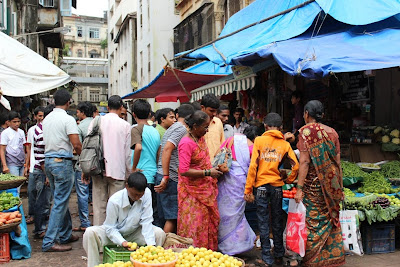
My college, like a lot of other schools and colleges, organizes a ‘Traditional Day’ every year – a day when everybody dresses up in ‘traditional’ clothes, dances, eats good food and takes lots of pictures.

So why have a Traditional Day? Is it to celebrate our varied traditions? OK, that seems like a legitimate reason, but honestly I don’t know if it makes complete sense or not. Traditions change, some die out, and new ones are created through foreign influences and local changes. There are a lot of girls (including me) who combine jeans with T-shirts/western-style tops on some days, and kurtas on other days. Guys dress Western style, and wear kurtas less often than the girls. And on top of that, most people speak English 70-80% of the time, including outside classes (though this is only true of my college, not necessarily others).

Sometimes Traditional Day just seems like an easy way to assuage the guilt we feel about being so Westernized. Living in Mumbai, we’re disconnected from the lives of the millions of Indians in rural and semi-rural areas. But ‘the heart of India is its villages’ - we get bombarded with this message all the time. So we want in on that too. Sometimes I feel like Urban Indian Guilt is similar to The Great White Guilt :) subtly filled into us through overt and subliminal media messages and societal expectations.

What’s the solution? Celebrating our traditions, by clinging on to saris and salwar kameezes that we don’t really wear otherwise?

Well, alright, it’s not even as if *I* know the solution to our East vs. West confusion; in fact, Traditional Day maybe a good solution for some. It’s not Traditional Day that bothers me but the attitude that accompanies it, the comfortable “I’m in touch with my roots and therefore better than you” smugness. The whole “I’ve found the perfect balance between tradition and modernity with my strapless saree blouse and sexy heels” is simply ridiculous. Priyanka Chopra in Dostana spends the entire movie in shorts or little dresses and then suddenly in a (rather pointless) song sequence, she emerges as the 'Desi' girl. So much like Traditional Day, OMG.

All of us in India (and for that matter the developing world) are constantly faced with the choice of east vs. west, tradition vs. ‘modernity’. And each of us makes different choices in response to this, based on our family background, upbringing, media influence, peer group, conscious choice, etc. And every individual’s choice is okay by me.

Let me finally clarify what exactly I’m getting at:
THERE IS NO PERFECT BALANCE.
THERE IS NO RIGHT AND WRONG.
There is no need to be either proud or ashamed.

I know people who wear western clothes 90% of the time, hardly speak in Hindi (or other Indian language), whose values are completely western; I know people at the other end, who are completely traditional and perfectly happy about it. And I know a bunch of people in the middle of these two extremes. All these choices are perfectly valid.

When I was 13, I went to camp. We were speaking to a camp instructor about our mother tongues and when he found out I wasn’t fluent in my father’s family’s language, Kannada, he immediately proceeded to tell me I should learn it and it was really sad and shameful I didn’t know it and that we should uphold our traditions and culture lest they die out.

Well. Firstly, culture is not a static concept that needs to be preserved or for that matter even can be preserved permanently. What I am today is the result of my upbringing – I was brought up near my mother’s family, so I speak Tamil. I’m not going to go out of my way to learn Kannada, just to ‘preserve’ culture. Instead, I’m the daughter of a Palakkad-Tamil mother and a Kannadiga father living in Mumbai who knows Tamil, Hindi, English and a smattering of Kannada.

And secondly, O venerable camp instructor, what about the fact that you’re wearing a shirt and trousers at the moment? How would you like it if someone came and told you you should be wearing kurta-pyjama and that you were helping destroy our culture? No, wait, not even kurta-pyjama, it should be angvastram-dhoti. :) I’m not judging YOU, am I? So please extend the same courtesy to me.

(I didn’t actually say any of these things to him, I just mumbled something and looked sheepish.)

So even though it’s all supposed to be relative, we all get judged every day. Either we’re too westernized and not ‘Indian’ enough, or we’re too ‘ghaati’ and not modern enough. I think this just reflects our lack of empathy. We don't want to understand others; we want to hang on to our little value judgements and preferences and impose them on others.

Sorry about this rant; for all its length it probably isn’t very coherent. That’s because my own thoughts on tradition and western influence aren’t very well formed. If there’s one thing I think I’ve conveyed clearly, it’s my confusion. Also, in the article I’ve focused on being judged for not being ‘rooted’ enough but there’s probably even more judgement on the other side – in certain circles, not being Westernized enough is social suicide.

I guess that’s what writing your opinion on the internet is all about, isn’t it? Putting your thoughts out there so anyone who wants to can berate the hell out of you. Oh well :)

Saturday, October 08, 2011

How to Buy a Saree Blouse

- By Deepa Krishnan

If you're female and Indian, there's one absolutely essential skill you must learn: how to buy the perfect blouse for a saree.

The Matching Centre is where you learn the ropes. It's almost a rite of passage, really.

My mom and sister, entering the Matching Centre

In the early days, when you enter the Matching Centre, you're filled with a gnawing, groping uncertainty about what to buy. So many shades to choose from! How can there be *that* many shades of green? And which of those is best for my saree? Should I buy a blouse the colour of the main saree? Or should it be maroon, the colour of the saree's border? If I buy the green will it also work for that *other* saree, the one that aunt gifted me? Two-by-Two or Cotton? 80 cms or 1 metre? Should I get lining for this blouse? Will it be see-through? Will this colour run? Will silk be too hot? Aaarrgh. A million questions, plaguing the rookie blouse-buyer.

See how difficult it is?

But then, just as you lose all hope, help emerges - and it's usually in the form of an unassuming guy with an unerring eye for colour. Every Matching Centre has this miracle guy, with a quiet manner, who will take your saree from your hands, find the *perfect* fabric with the *perfect* shade of grey or green or whatever. All you have to do is stand there with a grateful expression, and fork out the money.


Mr. Know-it-all-but-will-never-get-cheeky-about-it

As time goes along, you become more confident. You find yourself saying somewhat firmly "Two-by-two will do just fine, thank you". "No, I do NOT think that's the perfect shade. It needs a little more purplish-brinjalish-rani-pink, really." At this point in your life, you will find even older aunts turning to you and asking, "Deepa, do you think this blue shade is ok?". And you step in, inspect the fabric critically, and say "Uh-uh. Nope. Not sky-blue enough. It's got to have more white in it. See that piece? Fourth from the left? That's the one you need". If you're proved right, and that indeed is the right shade of sky-blue, you feel a wave of confident smugness that nothing can quite beat!

But is that all? Of course not. The goal (ahem) is to get to the point where you actually find yourself expressing your personality through the blouse you buy. What? You didn't know? Yep. The saree blouse is all about personality, baby :)

And how does one express personality? By going beyond the plain single-colour blouses, of course. You have to start using patterns and borders and coordinating them with your sarees - with just that little edgy difference to keep it from becoming boring. You'll buy some disastrous stuff in the beginning - but eventually you'll get there.

Some ghastly prints and some good ones

A nice but small selection of Maharashtrian khun

I bought this black and red one, to wear with a red Fab India saree.

Over time, you end up acquiring a set of printed blouses; and various combinations of plain sarees to wear with them.
Small part of my blouse collection!


And some sarees that I team them up with

I like this purple and ochre cotton saree; and this blouse with slightly different but similar shades looks very good when worn with it.

And *then* as you start to experiment, as you start to mix and match and reconfigure your wardrobe, people stop saying "Hey, nice saree!" and start saying "Hey, nice combo!".

That, my friend, is how you know you have arrived in Blouse Heaven. When they start noticing the blouse fabric, you've done it. You've finally cracked the Art of Buying A Saree Blouse.

Sunday, September 11, 2011

Why I love the Ganesh Festival visarjan

- By Deepa Krishnan

Today I went with my camera to get photos of Ganesh Visarjan.

I saw a lot of little things that arrested my attention, and I wondered why, inspite of living here all my life, I hadn't noticed these things earlier.

So this post is going to be a series of photos, titled I LOVE GANESH VISARJAN BECAUSE...


Because coming out to see Visarjan is the beginning of a tradition, grandfather to grandson.

Because only at Visarjan you can see a Mumbai-ki-chokri, dancing in abandon, taking the idol to the sea. When she dances, the world stops!


Because the rain makes the ecstatic drumming even more incredible.

Because the joy is very real - and not necessarily alcohol induced.


Because at some point, you'll always see the women doing fugdi :) :)


Because a little rain (or a lot of it!) doesn't mean a damn. People will line up for hours on the roads to wait and watch the processions.


Because Mumbai's upscale folks also celebrate this festival, they don't turn their noses at it. And it's great fun to go pandal-hopping and gawk at the gorgeous huge idols.

Because there are small family Ganpatis, not just big ones. This family of murtikaars have had a Ganesh in their home for 75 years.

Because there is pride and joy in decorating your own small thela


Because not everyone makes murtis of plaster! This is a clay murti.


Because children always get the best seats in the house :)


Because the shiny toy-sellers come out, and for one evening, Mumbai feels like a Rai Bareilly :)


Because you can hear kids refusing to get off the ferris-wheel even after the ride is over


Because the Mewad Ice-cream Man is not on holiday, and rain or no rain, you can eat ice-cream if you want.


Because basically, you can quite easily ignore the Elephant God and pretty much do your own thing if you want!! :)

Sunday, August 21, 2011

Dharavi Photos: Colours of Ramzan

- by Deepa Krishnan

Aishwarya and I went to Dharavi today, to meet some women who make papads. It was around 4:00 p.m., when we walked through one of the main bazaar areas. The street stalls were just beginning to be set up, with food for the evening iftar.

I could not believe the colour of the falooda packets that I saw - a pink so lurid that it would put all other pinks to shame :)

Amidst the lurid pink, were reds, oranges, yellows and greys

Foreground: Yellow Papayas
Behind: The falooda-man making take-home packets

The faloodas are really popular, so the vendor spends the afternoon tying them into little packets. In the evening, when the crowds assemble, he will have no time to do anything but hand over the packets (and count money)! Every few minutes, burkha-clad women would walk by and buy some to take home.

After the electric colours, the pale greens and muted yellows of the melons were very calming.

Just looking at these soft shades makes you feel cooler

Pineapples had been neatly peeled and the prickly bits had been taken out.

Pale yellow with dark green tops

Pomegranates add an exotic dash of maroon-pink to the fruits on sale. A mix of these fruits, sprinkled with chaat powder, will make a tangy, sweet way to break the fast.

Teen ka kitna? Lady in burkha taking three pomegranates home.

To add volume at low cost, bananas are added to the fruit chaat.

Ripe yellow with only vestiges of green

As if all this wasn't enough, watermelons and apples provide more colour!

There were lots of food stalls too, just beginning to be set up. The onion pakodas and kala-chana chaat counters were in place.

Adding orange and brown to the color-mix!

Usually the kala chana chaat is decorated with sliced tomatoes, and garnished with green coriander and lemon, but because it was early in the day, the presentation wasn't fully ready. But you can imagine it, can't you? :)

I saw people at little restaurants hard at work, setting up great big handis of mutton biryani, with coloured rice. At some counters, jalebis were being fried and dunked in sugar syrup. I couldn't see any of the famous kababs or indeed, any meat on hot griddles (tawas)...perhaps the griddles would only come later around sundown.

The chicken shops and meat shops were doing brisk business. This butcher stopped his thaka-thak-thwack for a little while to give me a smile.

Impressive heavy knife, making dull sounds on wooden meat counter. (Little bits of gristle would fly every time the knife came down. Not good for my vegetarian soul!)


These little boys had set up neem datoon stall.

Chewing the twigs releases chemicals in the plant that can kill bacteria and reduce the build up of plaque on the teeth. The neem datoon counters also sold lemons. I liked the contrast between the two colours, but couldn't understand why all the datoon stalls also sold lemons. Do you know? Is it because neem is bitter?

Meswak or Siwak is also used for cleaning teeth
(and tastes much, much nicer than neem!)

After the walk through the bazaar, we met some women, who were papad makers, to find out more about their life (material for another post perhaps!). By the time we finished chatting, another couple of hours had passed. We walked back through inside lanes to where the car was parked.

Because we came through residential twisting lanes, I didn't realize how much the bazaar area would transform in a couple of hours.

The crowd was incredible.

Our car in a sea of humanity
We inched further ahead, and found that the road was impossibly jammed with people. A handcart trundled to our left, piled high with suitcases (manufactured in Dharavi). As far as eye could see, the road was full of people.

We decided to stoically inch further ahead

By this time, I was standing with my entire torso outside the Innova, photographing the road :) It was quite an experience, actually, watching the crowd stream past, all intent on reaching home in time for prayer.

"Press walon ki gaadi hai" was the murmur in the crowd
(it's my new DSLR camera - everyone thinks I'm a professional! Whereas I can only point and click!).

After about 20 minutes of going through the dense crowd, we finally came out on the main road. I would have liked to get down and photograph the evening iftar meal. But it would have meant waiting for at least another 45 minutes. We were tired, it had been a long day already and I simply wasn't ready to jostle for photos. Besides, I had really enjoyed watching the lead up to the evening meal, and the ability to photograph all the vendors when they weren't going crazy dealing with the iftar rush.

I'm glad I could bring back these photos and post them. Hope you enjoyed them!

Thursday, August 18, 2011

Schmoozing, Indian-style

By Deepa Krishnan
The media today is full of the anti-corruption / Lokpal bill protests around the country. Some folks are pro-Lokpal, some are anti, but almost everyone agrees that corruption is really a huge issue and needs to be dealt with.
I think it's useful to look at this corruption issue from a historical and cultural perspective.
Humans have always given presents and sweeteners as a way to establish good relations, improve trading ties and smoothen their way. The first tribe that came out of a cave probably received presents of meat from visitors who wanted a place by the fire.
Certainly from the time of recorded history, every historical account of landings in a new place, or setting up of trading starts with little presents. Thomas Roe presented a book of European maps to Jehangir. The Jewish arrivals on the Malabar Coast presented gifts to the Cochin king. This is routinely the case at the courts of kings and emperors; from the durban at the door to government officials, everyone is part of the sweetening process.

Thomas Roe at the court of Emperor Jehangir
We should really first admit that this kind of dealing is part of the normal human way of life. Sweetening is done in many ways, you go with presents, you send boxes of mithai at the next Diwali, you return favours and contacts, and you eat and socialise together to make sure the relationship is reinforced. This is the way work gets done among human beings. We schmooze. We relate. We give and we take.
Shop selling fancy Mithai boxes for Diwali gifts
To expect that people will come out of thousands of years of a way of life/way of work and suddenly stop this way of influencing things is just very impractical. It may be "morally correct" but it is not practical. Those who can influence will always do so, whether it is by money or contacts or through ideas and words. I think taking the high moral ground on this is very much like many other moral stances that we love to take - totally impractical and completely blind to historical reality, or any understanding of what the average human being is all about.
When I look around me historically as well in the present day, I find that everyone in India understands the concept of influencing and schmoozing very well. After all, it is very much a part of our social culture and tradition!! What varies is the extent and style with which it is done. The current brouhaha is only because people simply are boggled by the SCALE at which it is being reported. Therefore we are seeing a feeling of outrage among people.
So what is the practical solution?
Before we attempt a solution, we need to understand that humans WILL try to influence, whether by social means or by money. So we CANNOT end that. But the line between baksheesh (tip), the traditional way of rewarding work, and ghoos (bribe) does exist, although it is very thin. So how do we ensure that this thin line is maintained?
I am inclined to think that the answer lies in the Indian legal system. All organizations have rules about what constitutes a gift and what constitutes a bribe. In large corporations this is called "a material amount" i.e. the amount above which you cannot accept gifts. In government also, this rule exists. So what we need really, is to tighten the EXISTING legal system to work faster, to allow reporting and punishment when someone crosses these rules. THE ABSENCE OF AN EFFECTIVE LEGAL SYSTEM IS THE ROOT CAUSE OF CORRUPTION IN INDIA.
There was a McKinsey report regarding this some years ago. The facts of that report were staggering. With the additional hiring of judges and setting up of speedy courts, the benefits to the nation were mind-boggling in terms of just economics.
I for one would like to see that report again, and look for solutions within that. Setting up a new Lokpal doesn't seem like a solution to me. My fear is that it will set up a new authority that goes against the basic principles of checks and balances enshrined in the constitution. What we need to do is make our current checks and balances system to work well. That is what we need to debate.
It is good that we have an Anna Hazare to raise the consciousness of people, and the current media-hype and circus around it is a necessary evil to increase awareness of the issue. But the stupidity of the situation is that this will lead only to Congress downfall, and not any long-lasting change in the historical way in which we Indians operate.

Sunday, August 14, 2011

Narali Purnima in Mumbai - fun with coconuts!

by Deepa Krishnan

I was walking along Bhaji Gully yesterday when I saw a crowd at a coconut shop.

It was Narali Purnima yesterday, the day that marks the beginning of the new fishing season. The fisherfolk offer coconuts to the sea, and pray for safety and a good catch (this year with the oil spills along the coast, they're going to need those prayers!)


Crowd at the coconut shop

What I didn't know is that the guys play a coconut breaking game on Narali Purnima. I chanced upon it suddenly, so it added a real dose of fun to the day!

Basically the game consists of two players, each buys a coconut from the shop, and then they try to break each other's coconut. The tougher nut wins :) :)

Stack of coconuts for sale, game in progress. Mr. Orange T-shirt gives it a go!

There is of course, a science behind the coconut selection. Too big, and the coconut will crack. Too small, and it won't be allowed in the game. Each player gets one turn to hit, and one turn to submit their coconut for hitting.

Give as good as you get

Sometimes, there's only a tiny crack on impact, and sweet coconut water comes spilling out. I saw the guys drinking the water by simply holding the coconut up over their mouths and letting the sweet water rush in. I wanted to go ask for some!

The coconut crack'd, nectar flowing!

Sometimes of course, the coconut totally shatters on impact, leaving a very pleased winner.

Smashed!

I had never seen this festival celebrated this way before - have you? There was a lot of shouting and glee all through the thing; a bunch of guys having a total blast. I had fun photographing it!!

Monday, August 08, 2011

Portrait of a Mumbai courier boy

- By Deepa Krishnan

I met this courier boy outside our apartment complex a couple of Sundays ago. He was sensibly dressed for the rainy season - shorts instead of long trousers, water-proof bag, documents covered in plastic. It was 9:00 a.m. and his day was just beginning.

I said to him, "I just bought a new camera, I'm learning to use it. Can I click your photo?" He nodded and said ok, and he posed for me on his bike. He had an infectious, almost cheeky smile. In fact, he came across as a very confident kid.

Nine am, quiet Sunday morning in Sion

He was wearing a T-shirt that said 'Good girls go to heaven, bad girls go everywhere'. It brought a grin to my face.

Confident look and cheeky T-shirt.

I showed him the photo in the camera viewer, and his smile widened. Since I'd just bought the camera, he asked me "What does this camera cost?".

I spread five fingers of my hand and said "Fifty thousand". He made an expressive "Oh boy" gesture, half grimace, half-grin, and I suddenly felt the sharp divide between our lives. I knew he thought I was super-rich. I suppose I'd react similarly if I went to that crazy Ambani house on Altamount Road.

I wanted to say something to the boy. Should I say "I didn't start out rich. I've worked damn hard for this"? That seemed too much like a guilt-assuaging trip :) Or should I say "If you study and work hard you can get there too"? That seemed like too much of a lecture to give to a stranger. But everything else seemed inadequate. So in the end I smiled and said "Yes, it's really expensive, no? I got free vouchers at the Croma store, that's how I bought it". The explanation eased things a bit...anyway, he said bye and zoomed off on his delivery round.

I thought to myself, just another day in Bombay, where multiple worlds collide. The differences are there, staring us in the face. We can't wish it away; all we can do is handle it as gently as possible.